From a 1951 land deal and the world's largest strawberry patch to a village incorporated Dec. 31, 1995: Wellington's history, memorials and places to visit.
Last checked Oct. 10, 2026. The history below comes from the Village of Wellington’s About Wellington page and charter, the Wellington Historical Society and the National Park Service. Updated when new records are published.
Wellington is young: the village was chartered on Dec. 31, 1995, and began operating on March 28, 1996. The land story starts in 1951, when New York accountant and investor Charles Oliver Wellington bought the tracts that carry his name, on land that flooded regularly at the edge of the Everglades.
Where to learn more
- Wellington Historical Society: online archive and oral histories, events and membership
- Village history: About Wellington
- Village Clerk and records: 561-791-4118
From swamp to strawberries, 1951 to 1971
According to the village’s history page:
- 1951: On the advice of Arthur William “Bink” Glisson, Charles Oliver Wellington assembles and buys several tracts that later become Wellington.
- 1953: The state creates the Acme Drainage District to drain more than 16,000 acres for farming. Bink Glisson is its first employee and general manager, and serves it for 40 years until he retires in 1993.
- 1950s and 1960s: Farmers lease and buy the drained land. About 2,000 acres grow strawberries, and the village says the area was once the world’s largest strawberry patch. The property becomes known as the Flying Cow Ranch, for the initials C.O.W.
- 1959: Charles Oliver Wellington dies; his son, Roger Wellington, chairs the district until 1984.
Fewer than 100 people lived in the area in 1953, the village says.
Building a community, 1971 to 1995
- 1971: The first big tract, 7,400 acres, sells to the Investment Corporation of Florida (ICOF) for about $800 an acre.
- 1972: ICOF and Alcoa form a joint venture to build a new community; hundreds of homes sell soon after.
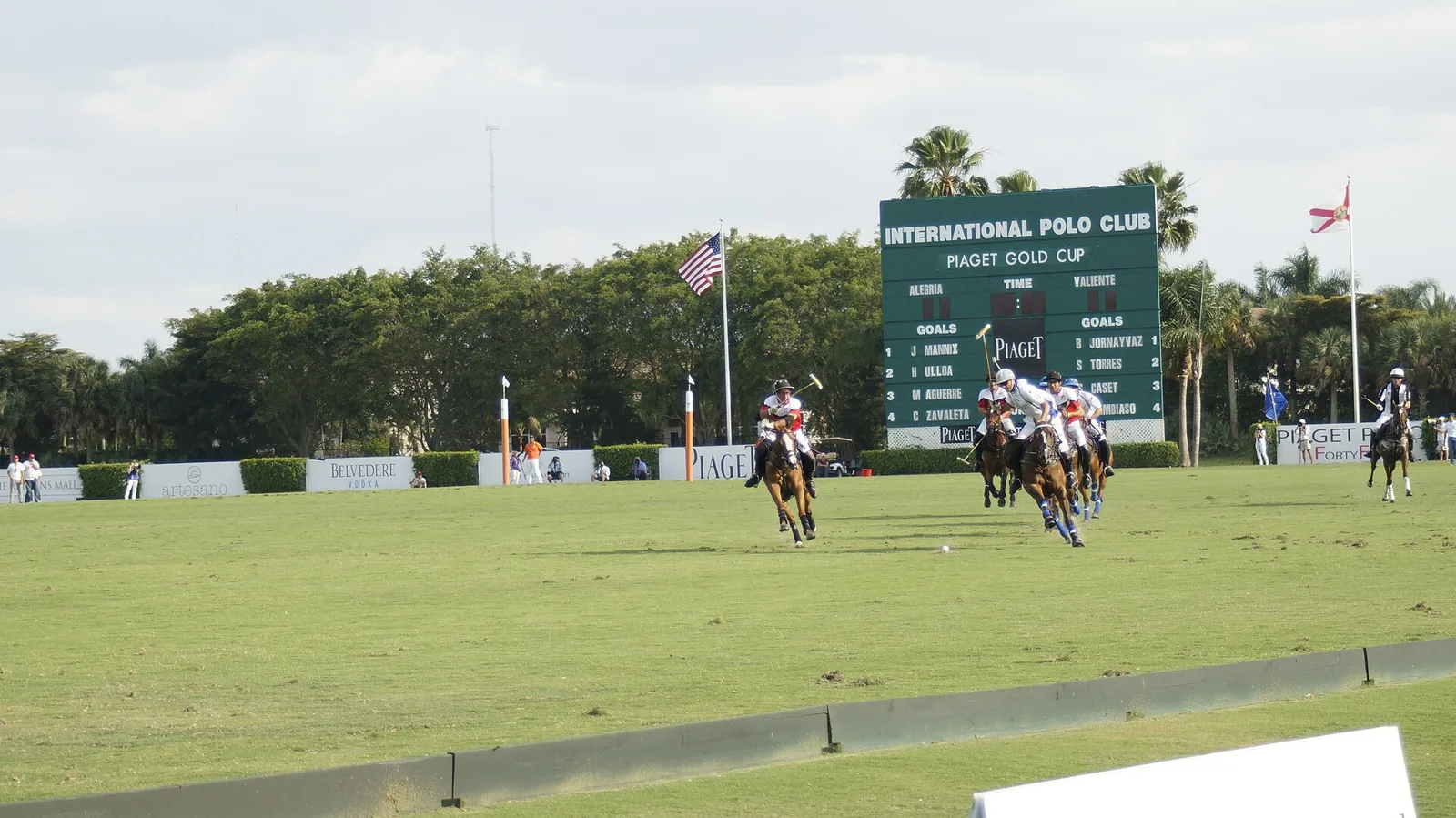
- 1976 and 1978: Alcoa sells its share back to ICOF, and ICOF’s remaining land goes to Gould Florida. Gould chairman William Ylvisaker, a polo player, creates the Palm Beach Polo and Country Club.
- 1985: Gould sells its remaining acreage to Corepoint; Lennar Homes follows.
- 1993: Glenn Straub buys the Palm Beach Polo and Country Club.
Becoming a village, 1995
In November 1995, residents won a referendum to make Wellington a municipality. The Florida Legislature’s charter act described “a compact and contiguous community of approximately 28,000 residents.” The village was chartered Dec. 31, 1995, a date chosen so it would qualify for state money, and started operations March 28, 1996. Village Hall opened on Dec. 31, 2010, the village’s 15th anniversary. Wellington now has about 62,700 residents; see our population guide.
National Register of Historic Places
No property in Wellington is listed on the National Register of Historic Places, according to the National Park Service’s list of listed properties, updated May 22, 2026. The same list has 77 listings elsewhere in Palm Beach County.
Landmarks and memorials you can visit
| Place | Address | What it is |
|---|---|---|
| Patriot Memorial | 12198 Forest Hill Blvd. | Dedicated on the 10th anniversary of the Sept. 11 attacks, with one of the largest steel beams salvaged from the World Trade Center, an eternal flame fountain and glass panels with the victims’ names |
| Veterans Memorial | 11848 Forest Hill Blvd., at South Shore Boulevard | Monuments for each war and conflict around a fountain, honoring veterans, police and fire rescue |
| Wellington Environmental Preserve (Section 24) | 3491 Flying Cow Ranch Road | 410-acre rainwater storage area with a six-story observation tower; named 2010 Project of the Year by the county chapter of the American Society of Civil Engineers |
| Peaceful Waters Sanctuary | 11676 Pierson Road | 30-acre constructed wetland with 1,500 feet of boardwalk |
| Wellington Amphitheater | 12100 Forest Hill Blvd. | Opened with an Independence Day concert on July 3, 2010 |
| Scott’s Place Barrier-Free Playground | 12190 Forest Hill Blvd. | Built by more than 300 volunteers; opened March 1, 2010 |
The memorials have no admission fee. The Preserve and Peaceful Waters close at dusk; see our parks and trails guide for hours. To add a name to the Veterans Memorial list or buy an honor brick, call Public Works at 561-791-4000.
The historical society
The Wellington Historical Society is a nonprofit of residents working to record the village’s history. Its online archive includes items on the village’s incorporation, the inaugural council meeting, a 1979 map of Wellington and early figures such as Bink Glisson. It holds community events, including trivia nights.
What this means for you
- Flying Cow Ranch Road, home of the Environmental Preserve, carries the old ranch’s name.
- The Patriot Memorial, Scott’s Place and the Amphitheater are all on the same stretch of Forest Hill Boulevard.
- Have old Wellington photos? The historical society collects them.
Related: parks and trails, population and your town, county and neighbors.
Frequently asked questions
When was Wellington, Florida founded?
Charles Oliver Wellington bought the land in 1951. Residents voted to incorporate in a November 1995 referendum, the village was chartered Dec. 31, 1995, and it began operating March 28, 1996.
Who is Wellington, Florida named after?
Charles Oliver Wellington, a New York accountant and investor who assembled the land in 1951 and was the first chairman of the Acme Drainage District until his death in 1959.
Are there National Register historic places in Wellington?
No. The National Park Service’s list of National Register properties, updated May 22, 2026, has no listing in Wellington.
What was Wellington before it was a town?
Farmland drained by the Acme Drainage District, created in 1953. The village says about 2,000 acres were once strawberries, making it the world’s largest strawberry patch.
Is there a Wellington historical society?
Yes. The Wellington Historical Society is a nonprofit run by residents. It keeps an online archive of photos and oral histories at wellingtonhistoricalsociety.org.
Have your say